
A University of Wisconsin lab worker upset about his colleague’s behavior and promotion allegedly confessed to poisoning the co-worker’s water bottle.
Subscribe to read this story ad-free
Get unlimited access to ad-free articles and exclusive content.
Makoto Kuroda, 41, was charged with recklessly endangering safety and tampering with a household product “with the intent to kill, injure or otherwise endanger the health” of another person, according to a criminal complaint filed in Dane County last week.
Kuroda allegedly admitted to a professor at the lab that he was upset at the colleague who Kuroda said failed to follow rules in addition to a number of small things “that all added up.”
The colleague was identified only by the initials TM in the criminal complaint. According to the complaint, TM and Kuroda met in 2017 and have worked together at the university’s Influenza Research Institute in Madison for five years.
The University of Wisconsin said in a statement that it became aware of the issue between two employees in the School of Veterinary Medicine and that Kuroda is on administrative leave as the university conducts a workplace investigation.
“His access to physical and digital university assets, and his research privileges, have been revoked,” the statement said. “Due to employee privacy laws and ongoing criminal proceedings, the university does not have additional information to share at this time.”
University police officers were called to the lab April 6 after a report that chemicals were discovered in an employee’s drink. TM told the officers he had opened a Trader Joe’s water bottle that had been on his desk for about two days and noticed a strange odor when he went to drink from it again on April 4, the complaint said.
“TM took a drink from the water bottle, noticed a strange taste, and spat it out,” the complaint said. “TM then observed this strange odor from his shoes on Monday, April 6, 2026, and believed it to be Chloroform.”
The water bottle and shoes were tested, according to the complaint. Preliminary results returned a presumptive positive for Chloroform.
“The sample was so high the test strips were not able to report an accurate value,” the complaint said.
Officers were called to the institute after Kuroda allegedly told both TM and supervisors that he was the one who tampered with TM’s water bottle. Kuroda allegedly went up to TM and said, “I did it,” the complaint states.
“TM and the defendant were good friends but is unsure how they drifted away and stopped being friends,” the complaint said.
A professor also told police that Kuroda responded to an email and admitted to tampering with the bottle. The email was sent to the professor in Japanese and translated to English in the complaint.
“I did it,” the email allegedly said. “I have also informed the person himself. I am very sorry.”
According to the complaint, Kuroda told the professor that he was “upset with TM not following the lab rule of wearing a lab coat and goggles.” He allegedly told the professor he put paraformaldehyde in TM’s drink.
Kuroda allegedly told officers that he had been upset with TM for some time, especially after TM was promoted and Kuroda was not, the complaint said. He felt that TM’s attitude had changed and that he treated subordinates as less than, according to the complaint.
He allegedly told officers that he saw a half-full bottle of water on TM’s desk on April 5. He then went back to the lab and used a syringe to retrieve “2 or 3 microliters of PFA mixed with Trizol,” from his work fridge, the complaint said.
“The defendant placed about .5 microliters of the mix in TM’s water bottle,” the complaint said. “The defendant then placed about 1.5 microliter of the mix into each of TM’s shoes he keeps at work.”
The amount placed in TM’s shoes would likely cause a rash and discomfort, Kuroda allegedly told officers. He also expected that TM would get sick, according to the complaint.
His aim was to make TM “feel bad,” the complaint said. Kuroda allegedly explained that about a year ago he wished something bad would happen to TM because he believes “bad things happen to bad people.”
Kuroda allegedly used ChatGPT to look up harmful amounts of the chemicals for humans and animals. The AI chat bot gave a number for what could be ingested and also gave “warning pop-ups” about what he was asking, the complaint said.
“When asked if he thought about reconsidering his actions after getting the warnings, the defendant stated he did not,” the complaint said.
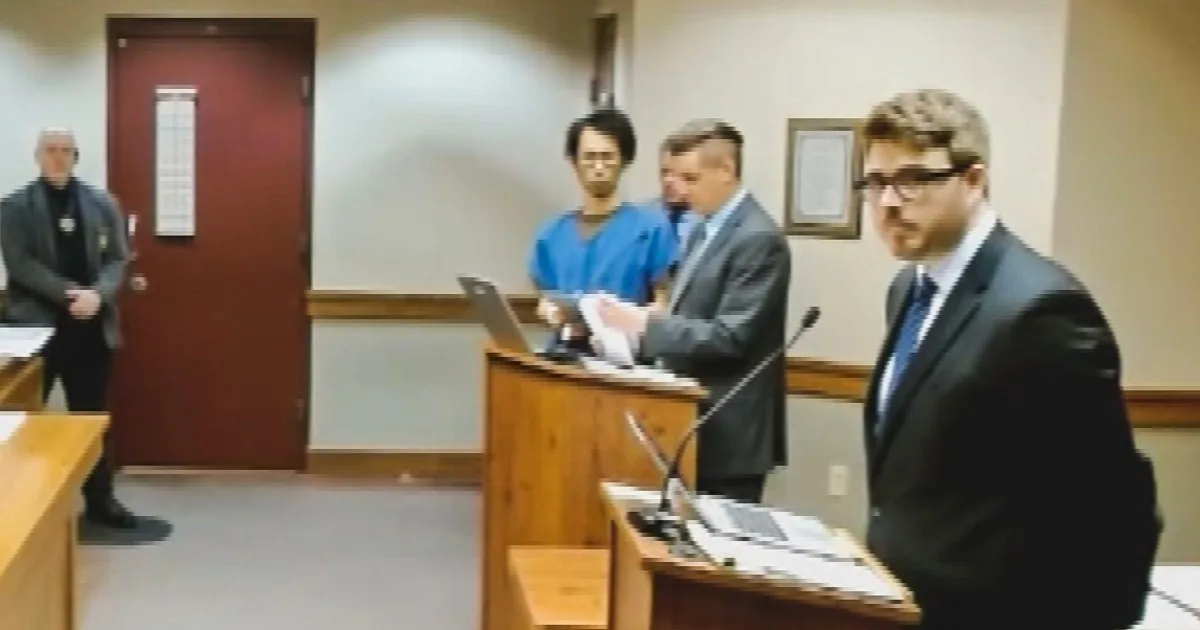
Court records do not indicate whether Kuroda has entered a plea. A $5,000 cash bond was set last week on the conditions that he surrender his passport, not have any contact with TM, and stay away from any University of Wisconsin laboratory.
A note in the court records indicates that Kuroda will need a translator for future court appearances. A public defender in his case did not immediately return a call requesting comment Tuesday.
Leave a Reply