
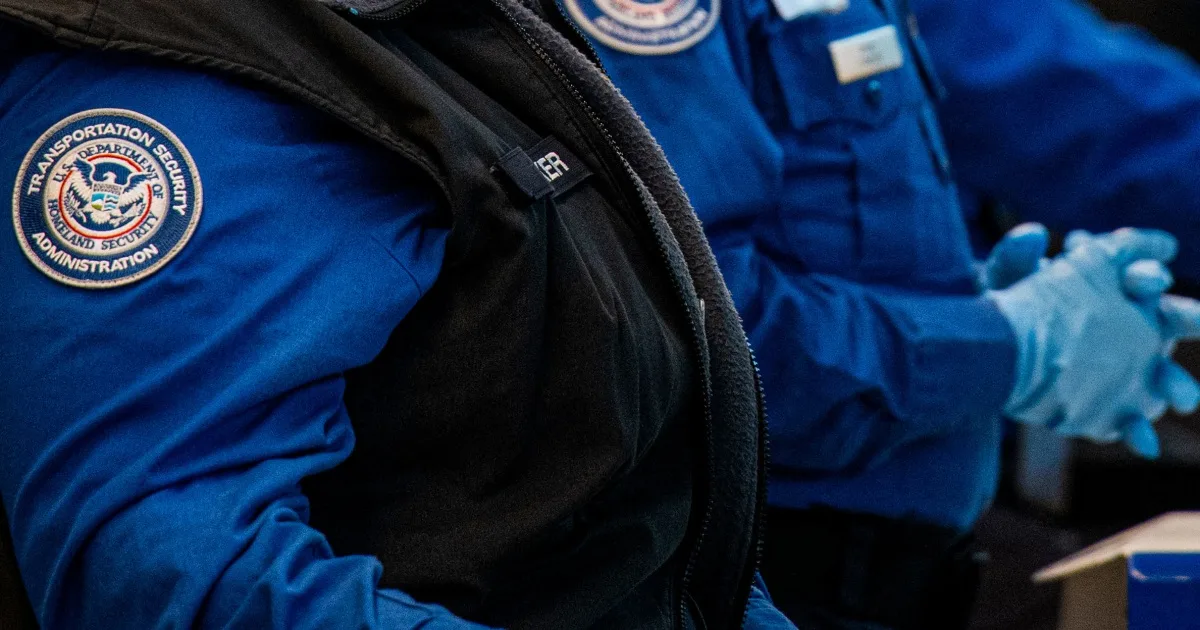
They took on extra jobs, hit the food banks, begged their families for money, and even sold their blood to pay their bills.
Now, after working without pay for a month, an ever-increasing number of Transportation Security Administration workers have been calling out of work even though they are legally required to continue manning airport security checkpoints.
The result has been long wait times for travelers flying out of airports across the country and overwhelming stress for the TSA workers who are still on the job.
“The burden is kind of being split around everyone,” said a TSA worker in California, who, like most of the federal workers interviewed by NBC News, spoke on the condition that their names not be published. “If someone calls off one day, all the people who show up the next day are like, ‘Yeah, that was tough. I’m gonna tap out.’”
Some 500 TSA workers have quit their jobs since the start of the more than a monthlong partial government shutdown, according to the latest tally from the Department of Homeland Security.
“When I took the job, I was like, ‘Oh man, this is going to be great’,” a TSA worker in New York said. “I can transfer and go to a different agency in about a year or two.”
Now, after having gone through this partial government shutdown and the one they endured last year, he’s thinking of leaving the TSA altogether.
But there is hope on the horizon, after the Senate agreed unanimously early Friday to fund the DHS and end the 40-plus-day funding lapse. This weekend it will be up to Congress to pass the measure.
Still, for many struggling TSA workers, especially those whose finances were decimated by last year’s government shutdown, even if the measure to restart the DHS funding passes, it will be a long time before they’re back in the black.
“We were still recovering from the last shutdown, the 43-day one, and none of our savings have really recovered,” said a TSA worker from Indiana. “I had just paid off some of the debts.”
The worker said he was not in a position to take what he called a “side hustle” to survive. Instead, he’s had to ask his family for money just to get by and recently moved in with his sister and brother-in-law, he said.
“It’s really demoralizing too, because I’ve had to beg my sister for money,” the worker said. “I’ve had to beg management for money just to be able to keep driving to work.”
His sister, whose husband also works at TSA, said she is working and juggling life with a new baby at home. She said they aren’t able to get any leniency on their mortgage and other bills and that they’re relying on food banks to get the basics and things like diapers and baby formula.
“I’ve always been told my entire life, go to college, get a good job, get married, buy a house, do everything right,” she said, growing more and more emotional as she spoke. “And I did. I’ve done everything right, and I feel like I’m being punished for being a good member of society. I feel like I’m being punished for doing exactly what I was told to do, for no reason.”
Devin Rayford, who is the president of the American Federation of Government Employees union local that represents TSA workers at Memphis International Airport, said that during the last shutdown the landlords and creditors were far more understanding of his members. He said a TSA worker would present a furlough letter and, more often than not, that worker would be allowed to delay a payment.
Not this time.
“We got people facing evictions, and certain creditors didn’t want to take the furlough letter,” Rayford said.
One of his co-workers, he said, was being threatened with eviction from her apartment complex because she couldn’t come up with the rent.
“I have a voice recording of the person in the office telling them like, ‘Hey, we understand what you’re going through, but you need to figure out how to pay your rent,'” he said.
Quite a few TSA workers are driving for Lyft and Uber “in order to make ends meet,” Rayford said. But others are resorting to even more drastic measures, he said.
Leave a Reply