
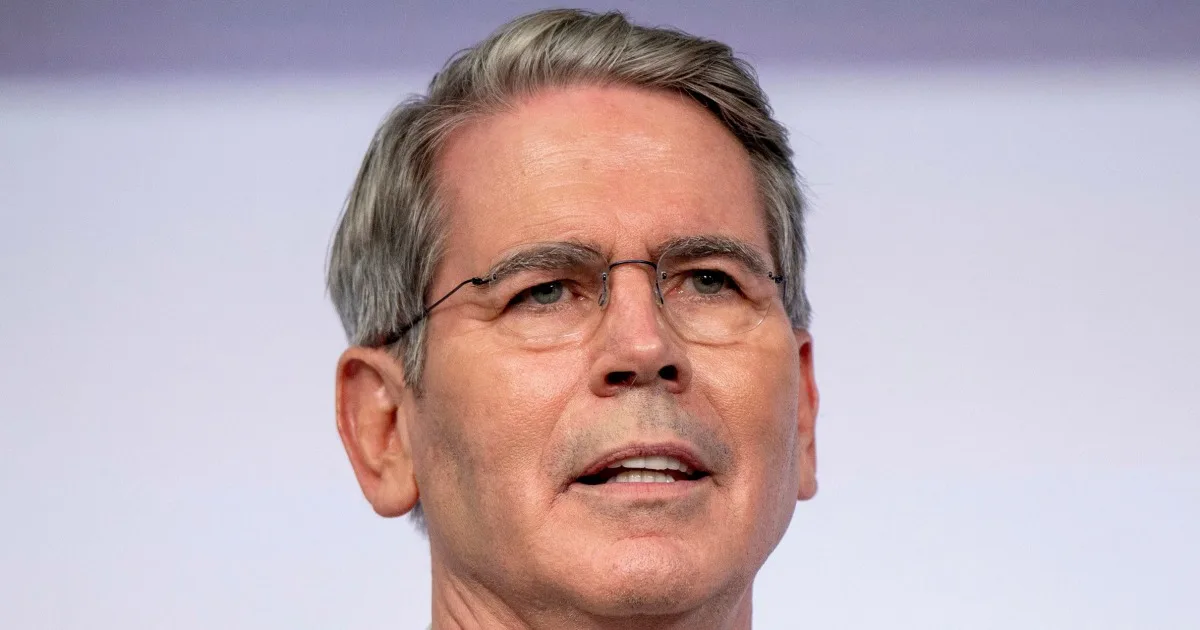
Treasury Secretary Scott Bessent on Sunday defended strikes on Iran’s infrastructure since the U.S and Israel’s joint operation against the country began in February, saying “sometimes you have to escalate to de-escalate.”
His comments came just hours after President Donald Trump wrote in a post on Truth Social that he was giving Iranian leadership 48 hours to open the Strait of Hormuz or risk U.S. military strikes that “will hit and obliterate their various POWER PLANTS, STARTING WITH THE BIGGEST ONE FIRST!”
Bessent defended Trump’s rhetoric, saying it’s, “the only language the Iranians understand.”
Early Sunday, a spokesperson for Iran’s military command headquarters warned that if the U.S. strikes oil infrastructure, Iran will respond in kind.
“If Iran’s fuel and energy infrastructure is attacked, then fuel, energy, information technology systems and desalination infrastructure used by America and the regime in the region will be struck,” Col. Ebrahim Zolfaqari said, according to the IRNA Iranian state news agency.
The U.S. in recent weeks has avoided striking Iran’s oil infrastructure amid ongoing military strikes on the Middle Eastern nation.
Last week, Trump told NBC News that the U.S. military “totally decimated” Iran’s Kharg Island, “Except, as you know, I didn’t do anything having to do with the energy lines, because having to rebuild that would take years.”
In the same interview, the president said he was working with international allies on plans to reopen the Strait of Hormuz, a critical maritime passageway for oil tankers that has been closed since the start of the war with Iran. The closure has led oil prices to surge globally and has led gas prices in the U.S. to surge as well.
Bessent on Sunday also addressed comments he made this week about Kharg Island, a critical hub for Iran’s oil production, where he told Fox Business, “The military assets on Kharg Island were destroyed,” and added, “We will see what happens with — whether that eventually becomes a U.S. asset.”
The treasury secretary did not explain what it would look like to make Kharg Island a U.S. asset, but told “Meet the Press” moderator Kristen Welker, “all options are on the table,” including sending U.S. troops to secure the island.
Bessent also defended the Treasury Department’s decision last week to ease certain sanctions on Iran by, “permitting the sale of Iranian oil currently stranded at sea,” as the Trump administration seeks to address rising energy costs.
Announcing the move on Saturday, Bessent said it would “quickly bring approximately 140 million barrels of oil to global markets” and help “to relieve the temporary pressures on supply caused by Iran,” though some experts questioned why the U.S. would boost Iran economically amid the war.
The oil the U.S. is allowing to be sold, Bessent said Sunday, “was always going to be sold to the Chinese,” at a discount.
The Treasury Secretary added, “we had always planned for this contingency,” and called the move “jujitsuing the Iranians,” by “using their own oil against them.”
Bessent demurred when asked about why the U.S. would allow Iran to profit off the oil, saying, “Iran already gets a huge amount of the money, because Iran is the largest sponsor of state terrorism, and China has been funding them.” This sale, he added would help the U.S.’ Asian allies, like Japan, Korea, Indonesia and Malaysia.
Sen. Chris Murphy, D-Conn., appeared on “Meet the Press” after Bessent and slammed the treasury secretary’s comments, telling Welker, “This administration has totally lost touch with reality. This war is spinning out of control. Prices are spiking for millions of Americans.”
The senator responded directly to Bessent’s comment about needing to escalate the war before de-escalating it by comparing the Iran conflict to past wars.
“It’s like they’ve never read a history book,” Murphy said. “That’s exactly what our leaders said in the middle of Vietnam and in the 20 years of mismanagement in Afghanistan.”
“We need to end this war,” the Connecticut senator added.
Leave a Reply