
The U.S. is about to get an initial glimpse into how the economy has begun absorbing the war with Iran.
Subscribe to read this story ad-free
Get unlimited access to ad-free articles and exclusive content.
The Bureau of Labor Statistics will release March’s Consumer Price Index report Friday, detailing last month’s inflation. Wall Street analysts expect it to remain elevated.
“Inflation remains a challenge,” Seema Shah, chief global strategist at Principal Asset Management financial group, wrote in a note to clients Wednesday. “Although it has trended lower, inflation has held above the Federal Reserve’s 2% target for five years and is now confronting a new shock.”
Forecasters expect that so-called core inflation, which excludes food and energy, will climb to 2.7% on the year, up from 2.5%. When food and energy prices are included, annual inflation most likely climbed 3.3%, forecasters said.
The U.S. conflict with Iran has already sent prices even higher for many consumer goods — which won’t be fully captured in Friday’s report. Even as the two-week ceasefire announced Tuesday appeared to ease some concerns about more significant economic fallout, the full impact has most likely not yet been felt as global markets continue to grapple with shortages of key commodities out of the Middle East.
Gasoline prices surged to their highest levels last month since the Covid-19 pandemic, while diesel and jet fuel prices set records. Companies from Amazon to airlines have begun charging increased fees to deal with soaring fuel costs, and many of those fees are unlikely to revert to pre-war levels.
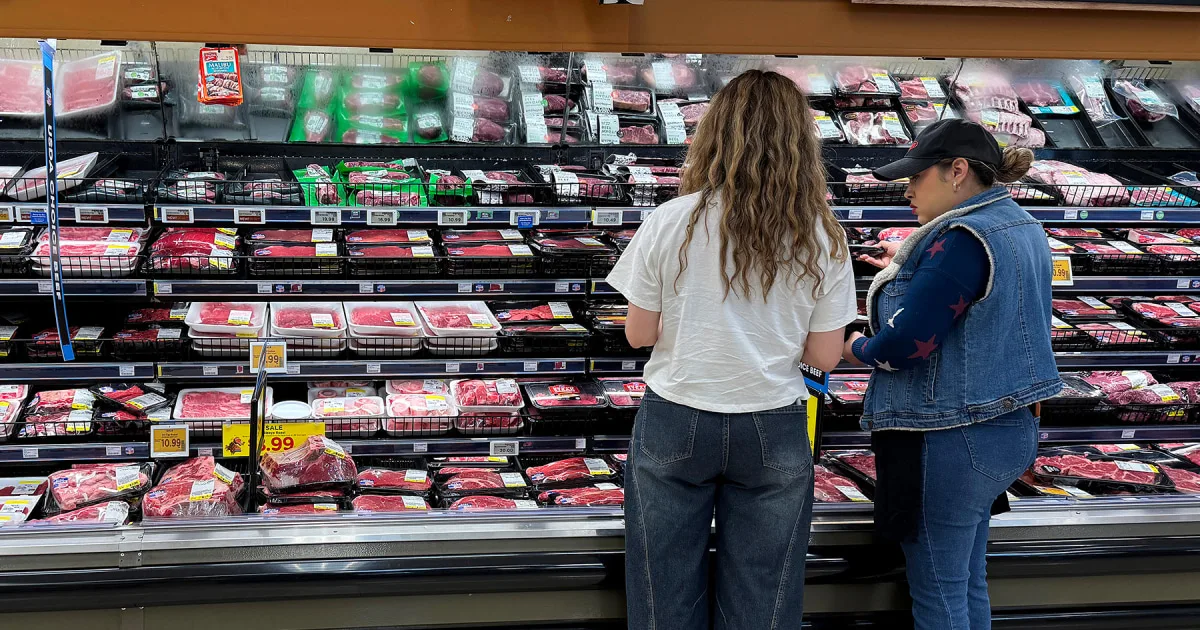
Beyond those shocks, U.S. inflation has remained elevated for used car prices, which have begun creeping higher. The services sector has also experienced persistent heightened inflation. Food prices also remain a challenge, with ground beef prices remaining at record highs.
Some analysts nevertheless believe other data shows consumer inflation was on a cooler path before the start of the war with Iran, largely thanks to slowing housing and rent prices, as well as reduced wage growth. They also point to Wall Street’s having estimated the Federal Reserve would cut interest rates twice before the conflict began — and they say rate cut odds have gone back up since the two-week ceasefire was announced Tuesday.
“We continue to think a softening labor market will limit substantial upside to spending and inflation,” analysts with Citi’s research unit said in a note to clients Thursday.
The Federal Reserve’s preferred inflation gauge firmed in February, federal data showed Thursday, largely reflecting the impact of tariffs, said Gregory Daco, chief economist at EY-Parthenon research group. Other income and spending data suggests the overall picture for the U.S. economy remains fragile.
“Make no mistake, households are increasingly running on fumes,” he said.
Leave a Reply