
A decades-old anime is shaping Netflix’s programming future.
Subscribe to read this story ad-free
Get unlimited access to ad-free articles and exclusive content.
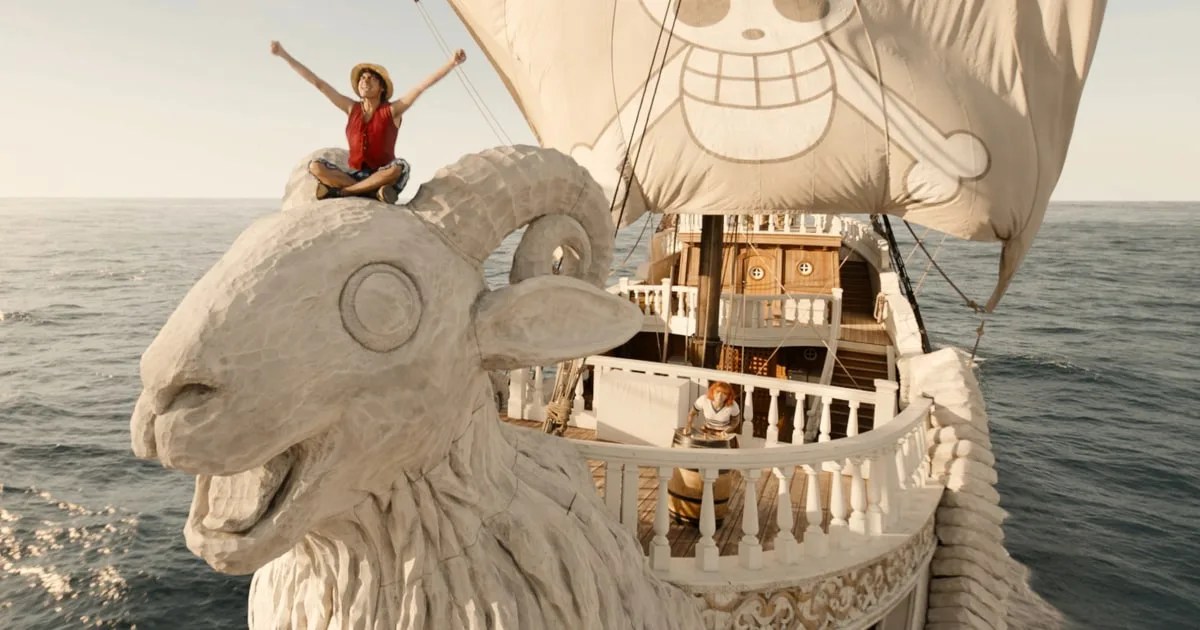
“One Piece,” the long-running Japanese pirate saga-turned-live-action hit, topped Netflix’s charts in 75 countries after it made its debut in August 2023. Its success has helped fuel the streamer’s broader push into anime, a genre that Netflix says now reaches more than half of its global audience.
On Tuesday, Netflix is announcing an expansion of the franchise. A third season of the live-action show, titled “One Piece: The Battle of Alabasta,” is set for 2027. The company is also developing a reboot of the original anime series — with creator Eiichiro Oda involved — as well as a Lego animated special due Sept. 29.
Netflix walked away from a deal with Warner Bros that would have dramatically expanded its library to include properties like “Harry Potter” and “Superman.” It’s now leaning into anime as a rich trove of stories and characters — having also recently unveiled a new slate of anime projects at AnimeJapan, the world’s largest anime show, in March. They include the soccer show “Blue Lock,” the dark fantasy “Jujutsu Kaisen” and the supernatural comedy “Dandelion.”
“If Netflix’s goal is to entertain the world, it’s hard to entertain the world without anime,” said Jonathan Helfgot, Netflix’s vice president of marketing.
Netflix dubbed its live-action “One Piece” into 33 languages, which has helped it become a critical and commercial hit. Its popularity also bolstered viewing of the anime version of the show, which launched on Japan’s Fuji TV in 1999 and is now carried by Netflix.
The “One Piece” world is also growing off-screen, with the launch of an escape room experience at Netflix House Philadelphia and the sale of consumer products, including “One Piece” Nerf toys, Funko dolls and coloring books. There’s even a line of “One Piece” apparel at Hot Topic, where one of the show’s signature straw hats sells for $23.
The growing global interest in anime is driven by a young audience, many of whom found the genre during the Covid-19 pandemic, according to Doug Montgomery, CEO of Global Connects Media, a Tokyo-based media and entertainment consultancy.
“People who grew up with YouTube are used to watching foreign stuff, they’re used to dubbing,” Montgomery said. “During the pandemic, when U.S. production was shut down, there was nothing new on TV. But Japanese content was available. It was fresh, and a whole new generation found anime.”
Gen Z audiences are just the latest to discover anime thanks to Hollywood executives looking to tap new sources of content. Many of today’s millennial TV and film creators grew up in the 1990s, when the nascent Cartoon Network began airing anime shows.
“As the cable business grew, they needed to fill the airways,” Montgomery said. “So why’d they pick anime? Because it was cheap. Now there’s a whole bunch of people who are getting in positions of power who grew up with anime.”
“One Piece” showrunner Joe Tracz said he remembers when people used to “get home from school, turn on the TV and sometimes you see an American cartoon, sometimes a Japanese cartoon, and some of the time you didn’t actually know where it was coming from.”
Now, “you’re getting generations of people who don’t really see that distinction anymore,” he added. “A good story is a good story no matter where it comes from.”
Netflix joins other studios that have leaned into the genre and its massive fan base in recent years. In 2021, Sony bought the anime streaming service Crunchyroll from AT&T for nearly $1.2 billion. Sony, considered an anime powerhouse, said in 2024 that it sees the platform as the “primary growth driver” at Sony Pictures Entertainment “over the next few years.”
The live-action “One Piece” has drawn in both ardent fans of the original manga and newcomers unaware of its anime history, which Tracz said is vital to its success on Netflix.
“With this show, you always have two audiences in mind,” Tracz said on a recent Zoom call from the “One Piece” set in South Africa, where he’s shooting the third season. “There’s fans of the manga who know the story inside and out. Their passion is why it’s getting translated. And yet there’s people who have never picked up a manga, they’ve never watched an anime, and they might not think that’s for them. The challenge is always how do we serve both those audiences.”
“One Piece” fandom has shown up in some surprising places, including in Gen Z-led protests in Nepal last year, when human rights activists waved the anime characters’ signature flag, a skull and crossbones wearing a straw hat.
Tracz said he is aware that audiences watch “One Piece” for a variety of reasons, including, sometimes, the political subtext.
“If you’re looking for a fun pirate show, we’re that,” he said. “But if you also want to see a show that’s going to look at how small people can stand up for what they believe in in the face of something big and powerful, that’s there, too.”
Leave a Reply