
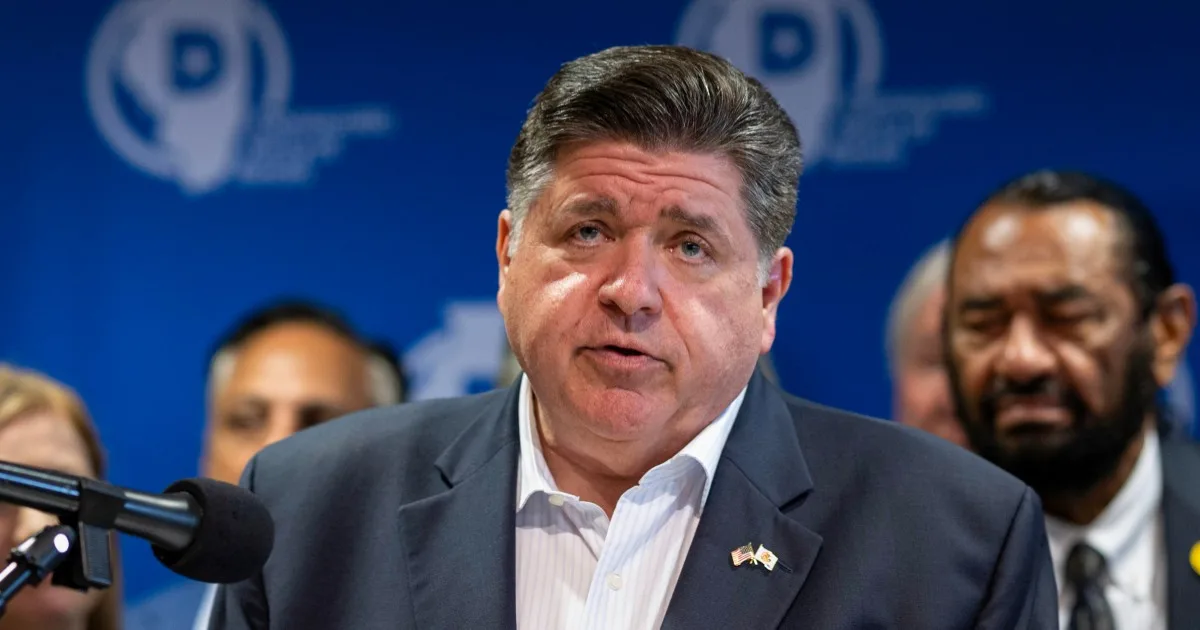
Illinois Gov. JB Pritzker is expected Wednesday to call for a two-year suspension of tax incentives offered to develop data centers amid growing scrutiny over their rapid expansion and impact on communities.
Pritzker plans to advocate for a policy shift in his State of the State and budget address in Springfield under a proposal first shared with NBC News.
At the center of the plan is a two-year pause, effective July 1, on Illinois’ data center tax credit program. Pritzker will instruct key state agencies to study the impact of existing data centers on the state’s energy grid and consumers and analyze the financial impact the centers have had on the economy. Specifically, the governor’s office said it is trying to make sure the centers are financially sustainable over time, protect consumers from soaring energy costs and ensure fair allocation of resources.
Illinois’ Democratic-led General Assembly must approve Pritzker’s proposal.
Data centers are massive structures that run computer servers that power the growing demands of artificial intelligence. Illinois would be hitting pause on their proliferation as community backlash intensifies across the country, with residents from Oregon to Virginia to Indiana calling on local officials to rein in data center development amid rising electricity costs and water consumption.
While a number of states are rushing to create incentives for companies to build data centers, some governors — including potential 2028 candidates — have also moved toward more oversight. Pennsylvania Gov. Josh Shapiro, a Democrat, recently announced a set of criteria for data center developers to qualify for state resources, and Florida Gov. Ron DeSantis, a Republican, has put up some guardrails around data center growth.
In Pritzker’s proposal, tax incentives would not be available for new data centers for two years, beginning in July. In 2024, Georgia lawmakers sent Gov. Brian Kemp, a Republican, a bill that would curb existing tax incentives, but Kemp vetoed it.
Data center development once promised a boost to local property tax bases and the promise of jobs. But since they have proliferated, residents have shared concerns about the disruption to their communities relative to their benefit. They have also expressed fear of the unpredictability in advancements with artificial intelligence that could leave the massive buildings stranded. One recent flare-up in neighboring Indiana prompted local officials to deny permitting to a data center proposed in St. Joseph County.
“As a governor who has long prioritized attracting businesses to the state, Gov. Pritzker’s decision to pause tax credits meant to lure data centers to build their facilities in Illinois is a significant statement—one other leaders should pay attention to,” Kady McFadden, a political strategist in Illinois who has a focus on climate policy, said in an email. “It is clear the governor recognizes these facilities are increasingly politically unpopular and should not lead to higher utilities bills for families. This is a prudent decision on the governor’s part as Illinois is beginning a legislative discussion about the future of data centers in the state.”
Pritzker’s office stressed that Illinois remains welcoming to business growth but is trying to balance development with its impact on consumers. Illinois generates more electricity than it consumes, according to the governor’s office, exporting 20% of the electricity it produces.
Pritzker is also expected Wednesday to cast blame on the Trump administration for rising energy costs, saying they were driven by slashing tax credits and loans for affordable, clean energy resources.
Pritzker spoke this month of his hesitancy about data center development in the future.
“I do not want to add data centers that are not paying their fair share and making sure that we’re not affecting home rates in any way by having data centers in the state to the extent that we do,” he said. “If they do threaten to raise rates, we’ve got to slow them down and make sure they understand what their responsibilities are. And we’re going to be looking at that in the legislature this spring.”
Leave a Reply