
Israel’s latest round of fighting with Hezbollah began after the launch of the joint U.S.-Israeli war on Iran in late February, when the Lebanese militant group fired rockets into northern Israel in retaliation for the killing of Iran’s supreme leader.
Since then, Israel has taken control of a large swath of southern Lebanon, destroying entire villages there amid continued ground operations.
‘A weapon of propaganda’
Efforts to advance a peace deal that Israel and the Lebanese government agreed to in late June have shown few signs of progress.
As of Nov. 15, more than 304,500 people remained internally displaced in Lebanon, while at least 4,390 people were killed and more than 12,400 injured between March 2 and mid-November, according to data published by the United Nations Office for the Coordination of Humanitarian Affairs.
It warned of a widespread need for humanitarian aid across Lebanon amid Israel’s operations and that ongoing hostilities in the south continued to threaten the safety of civilians and restrict their movement.
“Many people are still displaced and they cannot go back to their houses either because they’re in occupied territories or because they were destroyed, or there’s not livable conditions there due to the lack of services in these areas,” Marwan Issa of Oxfam told NBC News in a phone interview Tuesday.
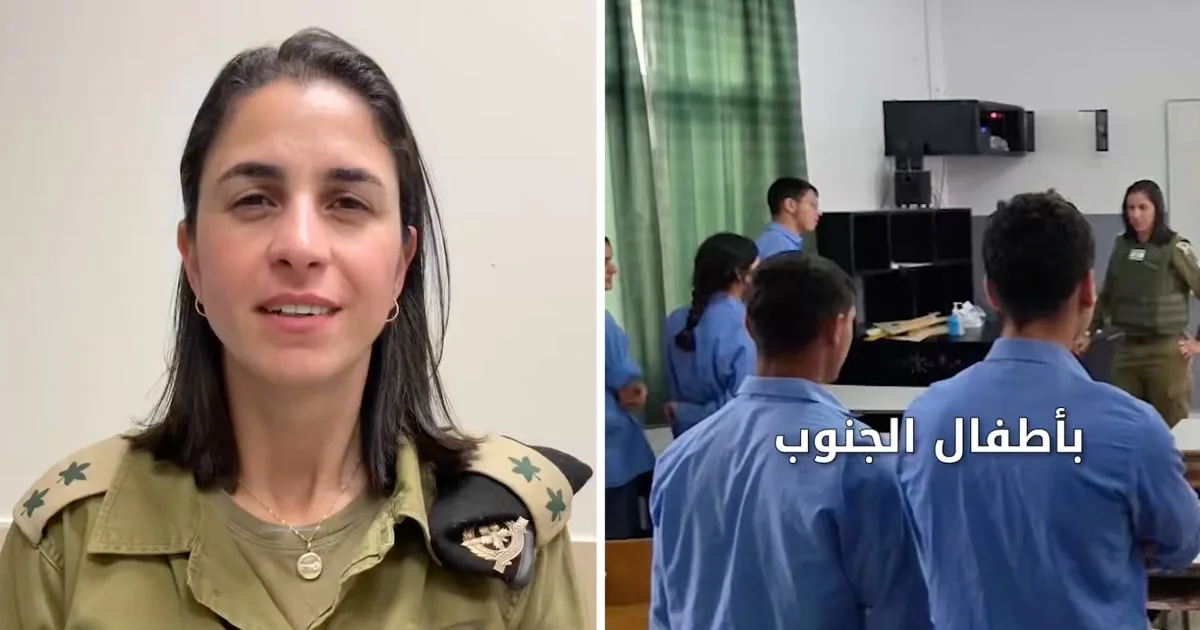
Issa said he did not think the school visit was “appropriate at all.”
“This is a very bad example of education and children’s rights being used as a weapon of propaganda,” he said.
Lebanon’s Education Minister Rima Karami said in a statement shared by her office that the visit at Debel Intermediate Public School in Debel, a predominantly Christian village, appeared to have been filmed over a month ago, without the ministry’s knowledge.
“Exploiting the difficult security and humanitarian conditions faced by our people in the south — particularly in the resilient villages — to enter schools and use children and educational institutions for military and media-oriented propaganda is unacceptable and reprehensible,” the statement said, according to the National News Agency.
Asked on Monday to confirm when exactly the visit took place and whether it was approved by Lebanon’s education ministry, the Israeli military declined to provide any further response beyond its confirmation that a review was underway.
Speaking with local media, Debel residents have expressed fears of internal backlash over the incident and stressed they did not invite the visit.
Leave a Reply